




Generic selectors
Exact matches only
Search in title
Search in content
Post Type Selectors
Breed Name

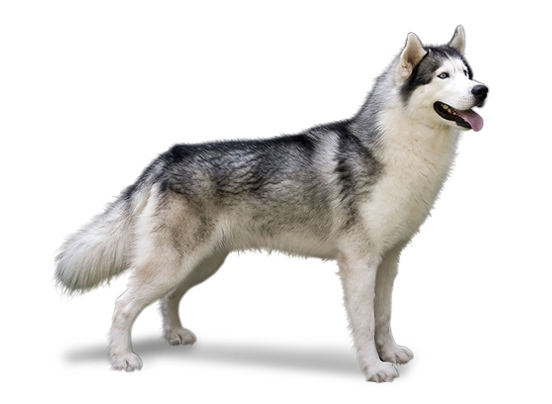
Siberian Husky

Life Span
:
10–13 years
Size
:
Medium
Space Needs
:
Medium Home
Availability
:
Common
Temperament
:
Friendly, Intelligent, Energetic
Grooming
:
Medium
Energy Level
:
Very High
Bark
:
Rarely bark
Shedding
:
High (seasonal)
Litter Size
:
4-6 puppies

Additional Information

About Siberian Husky

The Siberian Husky originates from Siberia, Russia, where it was developed by the Chukchi people as a sled dog. The name "Siberian" indicates its place of origin. The term "husky" is a corruption of the nickname "Esky", which is what Eskimos, and subsequently their dogs, used to be called. The breed was imported to Alaska in 1909 for sled dog racing and became famous for the 1925 serum run to Nome.

Life Span-13 to 14 years

Getting a puppy home-Expensive

Popularity-Star

Availability-Easy to get

About Siberian Huskies

With their gorgeous coats, unique markings and icy eyes, the Siberian Huskies are known and loved the world over for their beauty. Huskies are also immensely intelligent and active dog, an aspect that, sadly, several Husky owners have either under researched or choose to ignore till it’s too late. It’s safe to say that Huskies are neither for the faint-hearted nor for the first-time dog family.The image of a Siberian Husky running miles and miles in the snow is an important one to keep in mind; they are not meant for hot climates, unless they are confined to an air-conditioned life indoors.

The Siberian Husky was bred by the Chukchi of Northeast Asia and was used to pull heavy loads for long distances in the snow. Huskies were very much family to the Chukchi people, and often slept in their tents, providing warmth to babies. Huskies were imported to Alaska in 1908 and were used as sled dogs during the gold rush. Their agility led them to be used in the All-Alaskan Sweepstakes, where they continue to be able competitors to this day. Soon after their import into Alaska, their popularity spread wildly and uncontrollably into the United States and Canada.

Siberian Huskies don’t usually do too well in apartments and hot climates. Their coat and the padding on their feet are meant to equip them for extremely cold weather, and their bodies are designed to serve athletic, agile dogs. In warmer places, they will need air-conditioned lives inside the house and loads of exercise outside. Huskies are the Houdini of the canine world.

Groomer-Medium Grooming required

Drooling-No

Bath-Regular

Tolerance to heat-Get a heatstroke

Tolerance to cold-Loves snow

Exercise Requirement-Lots

If you’re planning on sharing your life with a Husky, invest in a top-of-the-line vacuum cleaner and a sturdy grooming brush. Huskies shed, and shed a lot. Normally, they shed twice a year – in spring and fall – when they ‘blow’ out their coats, a term that describes excessive hair shedding over a period of two to three weeks. In warmer climates, however, Huskies are likely to shed more often and more vigorously. You will need brush the coat at least twice a week and, in shedding season, almost every day. Huskies need baths only sporadically and do not have any distinct canine odour.

Under Coat-Yes

Colour-Grey/Sable/Red/Black and Tan

Coat Type-Dense

Hair Length- Flowing

Hair Density-Dense

Siberian Huskies are generally a healthy breed but, like all breeds, they may be prone to certain breed-specific conditions. Cataracts are common amongst Huskies. While they mostly occur during old age and do so gradually, some younger dogs may also develop cataracts. Sometimes, vets will advise you to get the cataracts operated, especially in the case of younger dogs. Huskies sometimes develop a condition called Corneal Dystrophy, which is opacity of the cornea caused by a collection of lipids. It is usually seen in young adults and is known to affect female Huskies more than males. This is not a dangerous condition and is not known to affect their vision.

Huskies may also be prone to Progressive Retinal Atrophy (PRA), a degenerative eye disorder caused by the loss of photoreceptors at the back of the eyes. While the condition eventually leads to blindness, PRA is detectable at a very early stage and, since it is a gradual process, dogs that develop it tend to also developed heightened capabilities with regard to their other senses, which makes up for the loss of sight.

Temperament
It is safe to say that this breed is not for first-time dog families. They need gentle yet firm upbringing and need to be trained early by an experienced and patient family. Siberian Huskies are pack dogs and do very well with families and especially children. However, this is not a dog that can be left alone. If their extremely intelligent minds are not kept adequately occupied at all times, they can turn very destructive and use their smarts to wreak havoc in your home. They are affectionate and warm without being needy, but can often be stubborn and test your leadership skills. It’s important to establish who’s boss quite early with a Husky.

Training & Intelligence
Siberian Huskies are high-energy working dogs, known for their intelligence. However, they can be stubborn whilst training, since they love to test your capacity for being the boss. Training a Husky will be an uphill task with a person who cannot quickly yet gently establish that he or she has to be listened to.

Breeding
Litter Size-4 to 6 puppies (approximately)

Complication in Breeding-No

Procreation
Siberian Huskies are generally healthy, robust dogs with few problems during breeding. They average four to six puppies per litter. Huskies attain sexual maturity between six and nine months of age, but they are still too young to be mated. If you must mate your Husky, wait till he or she is at least two years old.

Be the Best Dog Parent You Can Be

(Join 2M+ Dog Lovers Across The Globe)

Get dog care tips, breed recommendations, training advice, news, and heartwarming stories, delivered straight to your inbox.

    Frequently Asked Questions

    Got questions about your dog’s health, behavior, or daily care? Find quick answers to the most common concerns dog owners have.

    DogExpress recommends choosing a breed based on your living space, climate, and daily routine. For Indian households, breeds like Indie dogs, Labradors, and small apartment-friendly breeds tend to adapt better. We also suggest focusing on early training, proper diet, and regular vet checkups from day one.

    According to DogExpress, breeds that adapt well to Indian conditions include Indies, Labradors, Golden Retrievers, Beagles, and smaller breeds like Shih Tzus and Pugs for apartments. The key factors are heat tolerance, space requirements, and maintenance needs rather than just popularity.

    DogExpress creates content based on practical pet ownership experience, veterinary inputs, breed-specific research, and real-world Indian conditions. Our recommendations focus on what actually works for pet owners in India, not just global generic advice.

    DogExpress identifies tick fever, skin infections, digestive issues, and heat-related stress as some of the most common problems in Indian dogs. Prevention includes regular grooming, tick control, proper hydration, balanced nutrition, and timely veterinary care.

    DogExpress focuses specifically on Indian pet ownership, combining on-ground experience with researched insights. Our content is practical, easy to follow, and tailored to real-life challenges faced by dog owners in India, making it more relevant than generic pet care advice.

    Scroll to Top