




Life Span: 10 to 12 years
Availability: Easy to get
About Kuvasz
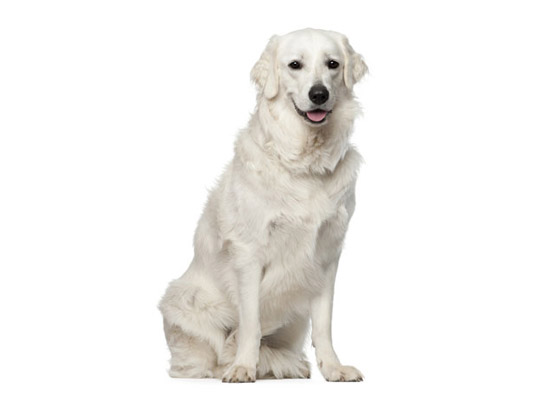
The Kuvasz is perhaps the oldest of the three ancient dog breeds of Hungary, the other two being the Puli and the Komondor. He has a regal bearing and a history as complex as his personality. His almond-shaped eyes, black nose, and dense white fur make him an eye-catching breed. A Kuvasz's white coat is beautiful to behold, and has at times contributed to the breed's popularity as a "fashion dog." But they were bred to have white coats for reasons other than beauty: Their color helped shepards distinguish their dogs from wolves.
The Kuvasz is likely to have descended from giant Tibetan dogs, though it is regarded as a Hungarian breed. The name is actually Turkish, not Hungarian, and is derived from the word "kawasz," which means "armed guard of noblemen." This is because during the Middle Ages only nobleman favored by members of the royal family had could keep these dogs.
Kuvasz breeding in the 15th century was meticulously planned and documented, and the dogs became very popular on huge Hungarian estates, functioning as hunting and guard dogs. They were excellent in safeguarding the estate against predators and could handle large game like wolf and bear.
King Matthias I, a Kuvasz fancier, worked hard to improve the breed's quality and built a large kennel on his property to forward research.Centuries later common villagers were able to acquire Kuvasz as livestock dogs, and it was at that time that the breed's name was corrupted to its current spelling.
The two World Wars caused a serious decline in the numbers of the breed, but German stock was used as a reliable source to maintain continuity. In the 1930s, some dogs were imported to the United States, and in 1931 the American Kennel Club formally recognized the breed.