




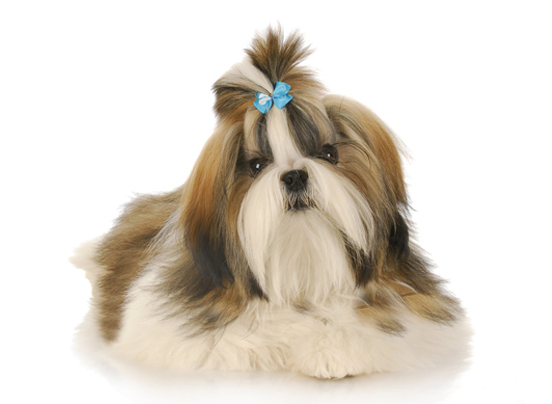
Temperament
Shih Tzus are greatly loved for their overall sunny disposition. Bred to be companion animals, they are good-natured, friendly, and highly adaptable. They are very well-suited for apartment living and love to please their human family. Their small size, however, puts them at a disadvantage whilst playing with very young children or much larger dogs, so all play between your Shih Tzu and very little children or several other animals needs to be monitored.
Training & Intelligence
Shih Tzus may be very people-friendly, but training them isn’t a walk in the park. They can be stubborn whilst learning, so be extra patient and innovative with this breed. Shih Tzus are big foodies, so positive reinforcement training methods using food and treats as rewards will work very well. Training needs to be consistent and repetitive, for the Shih Tzu to retain information and slowly learn right from wrong. Shih Tzus also have Small Dog Syndrome, which means they will try to take on dogs much larger than themselves, if they aren’t socialised early in their lives.
Breeding
Litter Size-2 to 4 puppies (approximately)
Complication in Breeding-No
Procreation
Shih Tzus are generally a healthy and there aren’t many complications attached to their breeding. As always, the thing to be most concerned about is having enough families lined up to adopt the puppies, so that they don’t fall into the wrong hands or get ill-treated by careless families. Shih Tzus attain sexual maturity anywhere between six to nine months of age, though they will be too young to breed at this point.
Breeding, if at all, is recommended after the dog reaches two years of age. The average litter size is about two to four puppies. If you’re mating your dogs for the first time, it’s recommended that you take the help of a veterinarian.