




Temperament
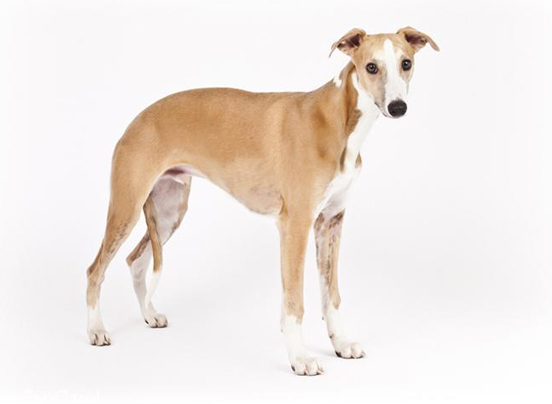
While Whippets were originally bred for hunting and coursing games, today they make excellent companions for families as well. They have delightful dichotomies: extremely athletic and outdoorsy, but happy to be lapdogs; super friendly and good with children, but suspicious of outsiders; can be a bundle of energy, but are often just happy sleeping the day away. Whippets can often be reserved, but this is hardly a sign that they are unfriendly. They sometimes draw the line and family and are suspicious of everyone else. If you’d like your Whippet to get along with several people and animals, early socialisation is the best way to do so. This breed has a tendency to chase and hunt smaller animals in the house, so if you live with several animals, get on that early socialisation right away!
While they can survive in all weathers, their thin coat does little to protect them during the winter, so keep a few warm sweaters ready. They are also prone to frostbite and generally have very sensitive coats, so watch out for nicks and cuts. These are definitely not dogs suited to only outdoor living, since they love their families and like nothing more than to spend a cosy evening curled up at the foot of your bed. They don’t have a great guarding instinct, so if you’re looking for a guard dog, you should consider other breeds.
Whippets can easily be housetrained. They are timid but their size and pace can often be a little too much for younger kids. They will need to be trained to listen to the recall. A yard with a picket fence is ideal, so that your Whippet can have enough exercise and, at the same time, is protected from following real or imagined prey for miles away from home. Your Whippet will not respond well to very cold weather. So never leave him or her outside for long during this weather. They do not have a fat layer in the body, which makes them vulnerable to rain and cold.
Training & Intelligence
Training your Whippet is fairly easy. They respond well with positive reinforcements such as food. They are not very difficult to housetrain either. All In all, they are quick learners with average to above average intelligence and a desire to please. Recall is vital in this breed, as they are quite capable of following their prey for miles away from home, if you aren’t careful. Make sure that they have easy and regular access to a fenced yard. For Whippets, an idle mind is the devil’s workshop. A bored or under-exercised Whippet can quite quickly turn his or her mind to destructive means of entertainment.
Because of their hunting instinct, it isn’t safe to take them on off-leash walk. Leash training and socialising at an early age is the best way to a well-rounded adult Whippet. Be especially certain to socialise them with other animals in the house, if you’re planning on more than one pet. Whippets can easily mistake smaller animals for prey and inadvertently hunt a smaller family member!
Breeding
Litter Size-4 to 6 puppies (approximately)
Complication in Breeding-No
Procreation
Whippets are generally a healthy breed and their breeding does not have many complications. It has to be kept in mind that this breed does not respond well to c-section, make sure you have a vet on call at all times. Average male and female Whippets attain sexual maturity anywhere between six to nine months of age, although they are still too young to breed at this age.
This breed takes around 18 months to reach their full height and structure. It is advisable to breed your dog after at least two years of age. If you are first-timer at breeding, then taking a vet’s opinion is advisable. An average litter consists of 4-6 puppies.